
2026-08-19 · Christopher James
What Causes Shingle Damage After Hudson Valley Thunderstorms
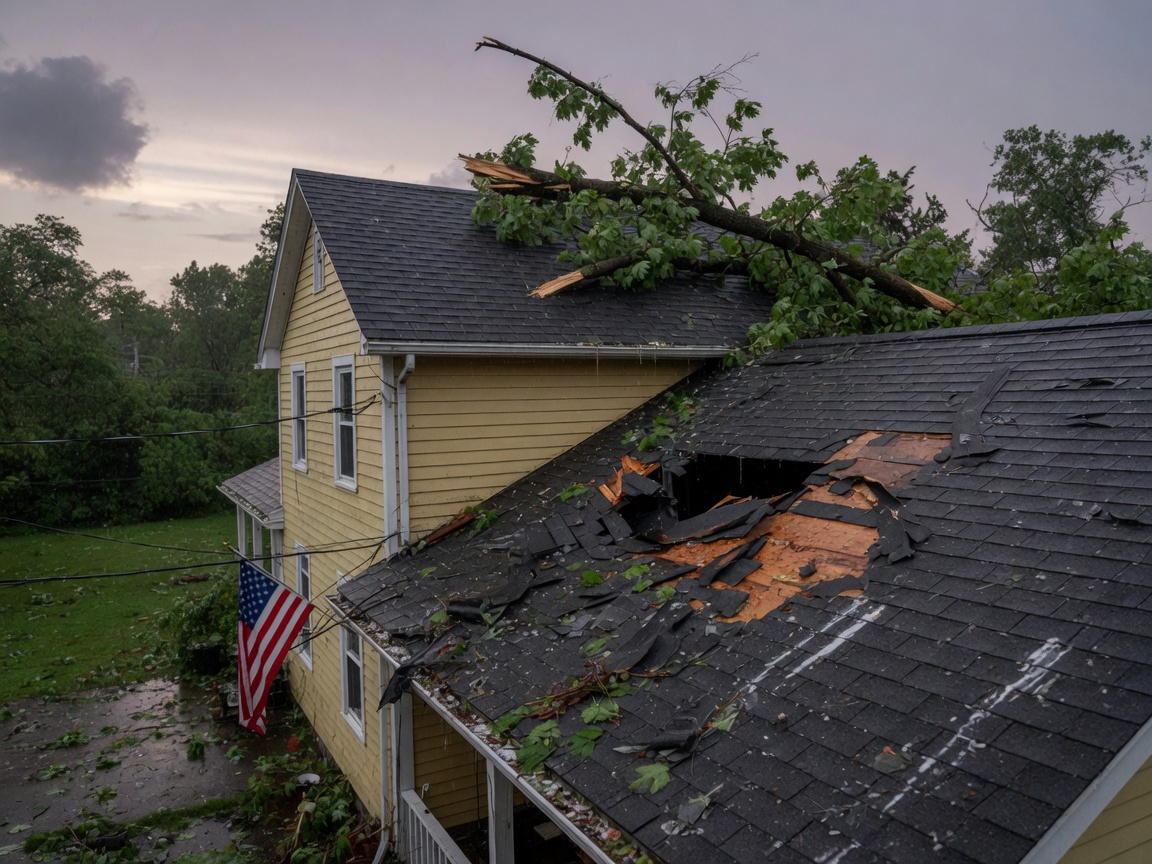
Hudson Valley thunderstorms damage shingles primarily through wind uplift that peels back edges, hail strikes that fracture the granule layer, and wind-driven debris that gouges surfaces on roofs in Fishkill and Brinckerhoff. These storms hit hardest on older asphalt installations common around the Fishkill Supply Depot and near Hudson Valley Hospital Center, where 20- to 30-year-old homes face repeated exposure.
Wind Uplift During Peak Gusts
Strong thunderstorm winds in Dutchess County often exceed 50 mph and pry at shingle tabs along eaves and ridges. Homes in Fishkill with south-facing slopes catch the full force because prevailing summer storms track up the Hudson River corridor. Once tabs lift, water channels under the remaining layers during the heavy downpours that follow, saturating underlayment within minutes. Crews at Christopher James Roofing, based at 102 Weston Ave, Fishkill, NY 12524, routinely find loosened shingles on two-story colonials in Brinckerhoff after these events. Checking for raised edges before the next front moves through prevents larger leaks.
Hail Impact on Granule Surfaces
Hailstones ranging from marble to golf-ball size fall during intense cells that form over the highlands west of Wappingers Falls. Each strike removes protective granules from asphalt shingles, exposing the mat to UV degradation that accelerates in the warm summers typical of the humid continental climate. Roofs near Beacon show concentrated damage on the north slopes because hail often arrives with the trailing edge of the cell. A single storm can reduce shingle life by 8–12 years on exposed sections. Roof inspection after hail events reveals the extent before hidden cracks allow moisture intrusion.
Debris and Falling Branches
High winds snap limbs from mature oaks and maples that line streets in Fishkill and East Fishkill. These branches land with enough force to tear shingles or dent flashing around chimneys on homes built in the 1970s and 1980s. The debris also dams gutters, forcing water back under the roof edge during the prolonged rainfall that follows the initial gusts. Properties near Wappingers Falls experience this more often because older tree cover remains dense around established neighborhoods. Clearing debris promptly after storms limits secondary water damage.
Post-Storm Inspection Steps
Walk the perimeter first and note any granules collecting in downspouts or at the base of the foundation. Climb only with proper fall protection and look for lifted tabs, cracked sealant at vents, and punctures along valleys. Document each area with photos that include the date and time for insurance records. Residents in Beacon and surrounding Dutchess County towns often schedule these checks within 48 hours while evidence remains fresh. Storm damage roof repair crews can then target only the affected sections rather than full replacement.
Understanding these specific thunderstorm effects helps Fishkill homeowners protect roofs through the warm summer months when cells develop most frequently. Regular checks after each event keep small issues from turning into leaks during the cold winters that follow.