
2026-08-19 · Christopher James
How Spring Pollen and Tree Debris Affect Roof Drainage in Fishkill
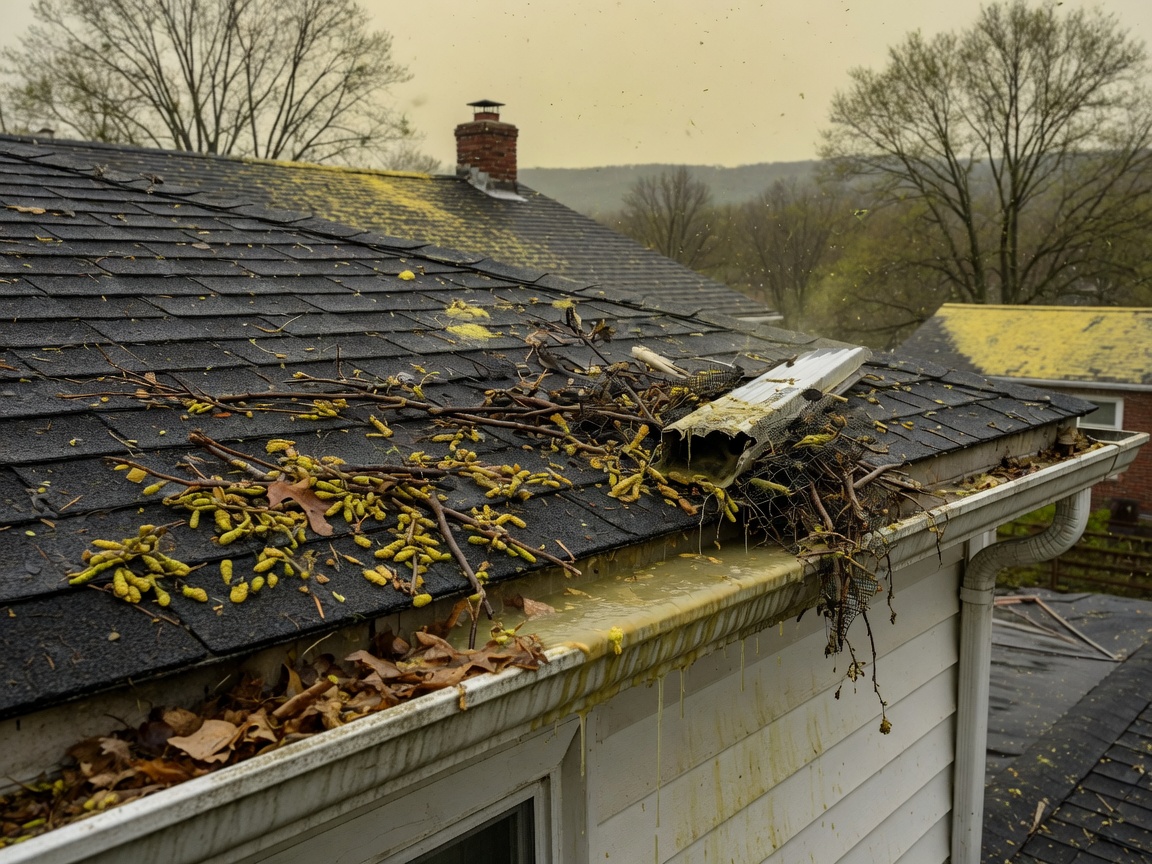
In Fishkill, spring pollen and tree debris typically restrict roof drainage within two to four weeks after warm weather arrives, causing water to pool along valleys and behind chimneys on homes in Brinckerhoff and near the Fishkill Supply Depot.
Pollen Accumulation Patterns in Dutchess County
Fishkill experiences a humid continental climate where warm spring days trigger rapid pollen release from oak, maple, and pine stands common across Dutchess County. This fine yellow dust settles on shingles and mixes with morning dew to form a sticky layer that traps additional particles. On older homes near Hudson Valley Hospital Center, the slope and texture of asphalt shingles hold pollen longer than newer metal surfaces. Once temperatures rise above 60 degrees, daily pollen counts spike and the coating thickens, slowing initial water shedding during light rains. Residents in Beacon and Wappingers Falls notice the same buildup because prevailing winds carry pollen across the Hudson River valley. The result is reduced surface flow that forces more water into seams and flashings.
Tree Debris and Gutter Blockage
Mature trees lining streets in Fishkill and Brinckerhoff drop catkins, twigs, and seed pods throughout April and May. These larger pieces land in gutters and downspouts, where they interlock with the pollen layer to create dense mats. A single heavy rain can wash debris from the roof slope into the gutter, but the mixture rarely clears the downspout opening. Homes built before 1980 in this area often have narrower 2x3 inch downspouts that clog first. Standing water then overflows the gutter front edge, streaking siding and saturating soffits. The same pattern appears on properties in nearby Wappingers Falls where tree cover is dense. Regular removal prevents the debris from compacting into a barrier that holds moisture against the roof deck through summer.
Drainage Effects on Local Roofing Systems
When drainage slows, water sits against shingles for hours instead of minutes, accelerating granule loss on asphalt roofs common throughout Fishkill. Valleys and step flashings become collection points where pollen and fine debris settle, reducing the effectiveness of the metal channels. Flat sections on garages or additions in East Fishkill trap even more material because there is less slope to move water. Over time the retained moisture encourages algae growth that further roughens the surface and holds debris. Commercial buildings near the Fishkill Supply Depot with larger roof areas see the same issue on a bigger scale, where scuppers and internal drains fill with the spring mix. Inspecting these points early reveals whether water is reaching the ground or backing up under the membrane.
Practical Steps for Fishkill Homeowners
Schedule a roof inspection before peak pollen season to identify low spots and existing debris traps. Clean gutters after the first warm spell and again in late May when most catkins have fallen. Trim overhanging branches on properties in Brinckerhoff to reduce the volume of material reaching the roof. Check downspout exits after every rain to confirm water is exiting at least six feet from the foundation. For homes in Beacon or Wappingers Falls with similar tree cover, the same timing works because regional weather patterns align. Review the article on when to schedule gutter cleaning before winter in Dutchess County to plan year-round maintenance. Christopher James Roofing operates from 102 Weston Ave, Fishkill, NY 12524 with hours Monday through Saturday 7am to 11pm and can assess drainage on residential and commercial roofs in the area.