
2026-08-19 · Christopher James
How to Document Storm Damage for Insurance Claims in Fishkill
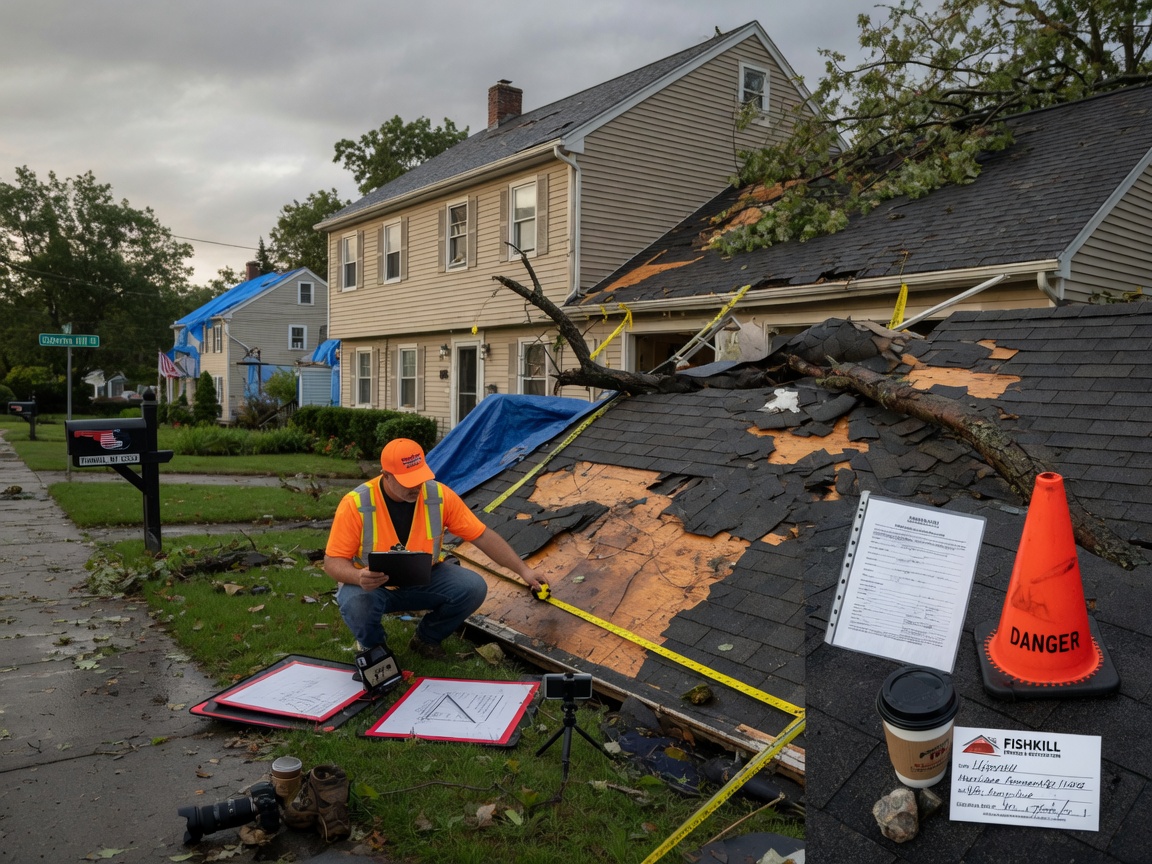
Documenting storm damage for insurance claims in Fishkill begins with capturing dated photos and videos of every affected roof section within 24 hours, noting wind speeds, hail size, and water intrusion points before any repairs start.
Capturing Initial Photos and Videos in Fishkill
Start at ground level around your Fishkill property, then move to safe vantage points such as a second-story window or ladder. Photograph the entire roof slope from multiple angles, close-ups of missing shingles, dented flashing, and any interior ceiling stains near the Fishkill Supply Depot area. Include a ruler or coin in each close-up for scale and record the exact time and date on your camera. Video the roof while walking the perimeter if access is safe, narrating visible cracks or granule loss. In Brinckerhoff homes built in the 1970s and 1980s, pay extra attention to older three-tab shingles that often lose integrity faster under repeated freeze-thaw cycles. Store all files in a dated folder on your phone and back them up to cloud storage immediately. These records help adjusters understand the full scope without relying on memory weeks later.
Recording Weather Details Specific to Dutchess County
Note the exact date and time of the storm along with local conditions reported for Fishkill and nearby Beacon. The humid continental climate brings sudden wind gusts over 50 mph and hail events that dent metal flashing or crack asphalt shingles. Write down any ice dam formation after cold nights or heavy rain that pooled near Hudson Valley Hospital Center. Include temperature swings from below freezing to the 80s within days, which accelerates shingle brittleness. Keep a simple log with printed weather station data from the National Weather Service for the Wappingers Falls area. This context shows insurers how local patterns, rather than age alone, caused the damage. Homeowners in East Fishkill often see repeated claims from the same spring nor'easters, so consistent records across multiple events strengthen your file.
Noting Interior and Exterior Damage Locations
Walk through every room and mark water stains on ceilings or walls with blue painter's tape and dates. In two-story Fishkill homes, check attics for wet insulation near roof valleys and document any mold starting within 48 hours. Outside, note displaced gutters, dented downspouts, and debris from nearby trees common along Weston Avenue. Measure the length of affected roof edges in feet and list which slopes face prevailing winds. For commercial buildings near Route 9, photograph membrane separations or ponding water on flat sections. Cross-reference each interior mark with the exterior roof location directly above it. This mapping prevents disputes about whether damage originated from the storm or pre-existing leaks common in older Dutchess County stock.
Organizing Documents for the Insurance Adjuster
Create a single PDF that starts with your contact information and policy number, followed by the weather log, then organized photo pages with captions. Number each image and tie it to a written description of the repair needed. Include any prior roof inspection reports from the past five years to show maintenance history. When the adjuster visits, walk them through the same path you used for photos and point out temporary tarps or buckets already in place. Residents in Beacon and Wappingers Falls often add a simple spreadsheet listing each damage item, estimated square footage, and material type. Keep copies of every email and phone note with the claims representative. This organized packet reduces back-and-forth and supports faster approval for storm damage roof repair.
Avoiding Common Documentation Mistakes in Fishkill
Do not begin permanent repairs before the adjuster sees the damage, as this removes evidence insurers need. Avoid using vague terms like "some leaks" and instead list exact locations and measurements. Skip posting photos on social media until the claim closes, since timestamps and angles can be questioned later. In cold winters, do not clear snow or ice from the roof until after documentation, because removal alters the scene. Homeowners sometimes forget to photograph undamaged sections for comparison, which helps prove the storm's selective impact. Review your file against the checklist from the related guide on average cost factors for asphalt shingle replacement in Fishkill before submitting. Consistent records protect your claim through the full process.